
A Case for Equity, Transparency, and Trust in the Workplace
Many folks wonder: is HR on the employee’s side or the company’s? But I think it’s safe to safe that very few people working in the modern workplace are under the illusion that Human Resources is their personal advocate. The reality is well understood and rarely disputed: HR exists to protect the company. That alone doesn’t make it bad, it simply makes it pragmatic. Every organization needs to manage risk, comply with regulations, and preserve the organization’s integrity.
But there is a great divide between protecting the company as a steward of justice and protecting it through mechanisms of control. Justice sustains a healthy culture, builds trust, and empowers employees to do their best work. Control serves to corrode morale, breed fear, and slowly dismantle the foundations that a Human Resources department is supposed to preserve.
The most dangerous and damaging HR departments are not the ones that make honest mistakes. They are the ones that stray from their true purpose. When they devolve into an internal enforcement arm, dictating instead of stewarding and silencing rather than listening, it stops functioning as a safeguard. It becomes corrosive, and starts consuming a company from the inside out while cloaking itself under a guise of protection.
A dysfunctional HR department isn’t just frustrating, it halts progress, drives away talent, and breeds conditions ripe for failure. Maybe most dangerous, it often happens under a facade of maintaining order, when in reality, it’s preserving its own power.
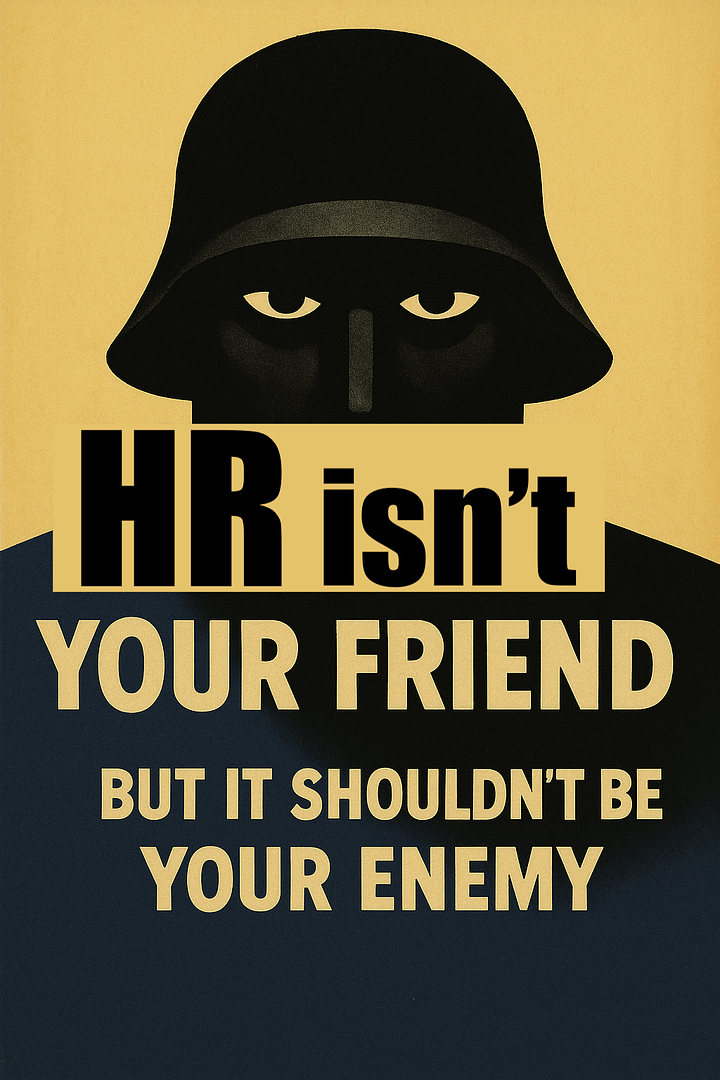
Why HR Isn’t Your Friend at Work: When Control Replaces Principle
Harmful dysfunction in HR typically stems from a subtle but fatal shift from upholding principle to preserving control.
In The Republic, Plato describes justice as a condition in which everyone fulfills their role in harmony with others, guided by reason. Justice isn’t the dominance of one group over another… it’s balance. It’s order built on integrity.
Under The Republic’s framework, HR should act as part of the guardian class, a steward of fairness, charged with ruling not for its own sake but to protect the harmony within the whole. But when the guardians overstep and they ignore wisdom or act from a place of ego, the polis (Plato’s city-state) suffers. And just like Plato’s city-state, the same is true for our organizations.
In far too many organizations, HR has become a misguided guardian class. Instead of serving as neutral mediators, they operate as self-appointed arbiters of power. I have personally seen stellar candidates blocked from hiring because HR claimed they had “a history of issues.” Histories without documentation and only vague “off-the record” notes whispered behind closed doors.
In another case, a recommended wage adjustment for a deserving employee was denied even though it fell squarely within the payroll guidelines. Not because it was outside of policy, but because HR “didn’t feel it was appropriate.” Their judgment, mood, and personal will carried more weight than any written guidance.
Worse still are promotion decisions derailed by what HR described as “undocumented performance concerns.” Consider that phrase… if performance concerns exist but remain undocumented, they are functionally meaningless. Yet lives and careers are shaped by this Kafkaesque logic. How do you challenge an invented justification without any evidence to confront?
Plato warned us that unchecked authority without wisdom degenerates into tyranny. Operating without transparency or accountability, doesn’t create order; but it certainly creates an environment of resentment, fear, and attrition.
Fear in the Halls, Not Trust
Why Employees Don’t Trust HR
When employees stop viewing HR as a safeguard but as a surveillance arm, the cultural damage is immense.
The result is silence… people stop raising concerns, managers avoid taking action, and problems go unreported and unresolved; quietly festering until they explode and driving good employees out the door.
Even more surprising can be the way some of these departments celebrate supposed “successes.” At one organization, leaders proudly proclaimed that the whistleblower hotline had never been used. This was touted as evidence of a flawless culture. But anyone with experience (and common sense) knows that no workplace is so perfect that no concerns exist, and reasonable people understand that silence is not proof of excellence… however it can be a telling bellwether of fear. Employees who aren’t reporting typically keep quiet because they don’t believe anything will change; or worse, they believe retaliation isn’t far behind.
A workplace governed by fear cannot function with integrity. When people can’t speak freely and they can’t trust leadership, they and the organization can’t thrive.
Aristotle, in Nicomachean Ethics, argued that the aim of any polis was to allow individuals to flourish, to live and act in alignment with their potential and virtue. HR departments that punish transparency and foster fear destroy any possibility of that. Instead of guarding flourishing, they suffocate it.
Examples of Dysfunctional HR Departments: The Aristotelian Failure
Aristotle’s doctrine of the mean is one of the most potent insights in moral philosophy: virtue is not in extremes but in balance. Justice, in particular, requires equity, an ability to temper rigid rules with context, empathy, and discretion.
Bad HR abandons this balance and instead veers toward the extremes: either enforcing rules with harsh, mechanical rigidity or bending them to protect favorites, avoid lawsuits, or cover for mistakes. In both cases, they fail the test of true virtue.
They frequently claim to be acting in protection of the company, but more often, they are actually protecting themselves. Instead of reacting to principle, they react to fear… fear of legal exposure, or perhaps reputational damage, or even just of losing face. They’re not acting with equity, they’re acting with expediency.
Inconsistency, overreach, and secrecy are never going to be hallmarks of virtue.
Aristotle called such weakness akrasia (or a failure of self-mastery). When HR departments lack the courage to admit error, humility to accept even the most basic of criticisms, or the consistency of conscience to apply policies with fairness… they’re failing not only the individual but the entire institution; and they’re simply sacrificing virtue for additional control.
What Real HR Should Look Like
HR Fairness and Transparency Best Practices
The real debate is not whether HR should exist, of course we need it, it’s an essential element of every business. Every organization is going to require a central hub to mediate between people, policies, and the risks inherent in the business’ collective work. The real question is whether they become a source of corrosion or a force for cultivation… ultimately whether it is going to govern through fear and secrecy or through principled equity and trust.
Dysfunctional HR departments are inherently corrosive. They twist policy into personal cuddles for power, they silence feedback, and enforce rules arbitrarily. A common telltale sign of these rogue HR departments are those that see every concern as a threat, each mistake as a liability, and every employee as a potential problem to be managed rather than a person to be supported or understood. That model creates a hollow, rigid, and brittle organizations… businesses that appear to have order on the surface but rot from within and are prone to disruption and losses at the first slight shake that fractures this fragile facade.
When they are ethical and principled, by contrast, they cultivate. They achieve this by providing clarity and ensuring policies are transparent and consistently applied. These departments show humility by admitting missteps and correcting course. It strengthens and empowers the organization’s leaders by empowering them instead of undermining. And perhaps most importantly, it preaches and practices equity by balancing rules with context, always ensuring that fairness is not sacrificed to arbitrary and inflexible policy. At the end of the day, these departments listen and ask questions; because listening is a bedrock of trust, and questions (difficult, honest, and insightful questions) are the key to real understanding of your organization’s workforce.
The difference between these two models is stark. One produces fear, attrition, and silence from the workforce. The typical response from these organizations is a belief that employees are replaceable commodities, and a blind acceptance that skyrocketing attrition costs are just a fact of doing business. The other model creates an environment of trust, retention, and engagement. The latter understands that a little effort, investment, and accountability is like a wonder drug for the business’ bottomline.
Plato would consider the first to be tyranny, it’s a guardian class that has decided to rule for itself. And he would deem the second justice, these are guardians acting for the good of the whole, not just a part and not just for themselves. Turning to his student, Aristotle would call them akrasia (a failure of self-mastery) and telos (a system that enables people to flourish in virtue together).
Those are our HRs, a tyrannical akrasia or a just telos, one that disproportionately favors one part of the organization over others and hinders progress and profit or one that supports the organization, applies policy with reason and equity, and ultimately serves the goal of harmony and progress for the business.
The Results of Reason: HR’s Role in Building Trust and Retention
The good news is that when Human Resources operates as the latter in our example, the results are immediate and undeniable.
People begin to speak freely, expressing ideas and concerns. Managers start acting with confidence. Throughout the organization there is a discernible improvement in performance, not because of control, but because employees are respected and feel free to work without fear. Talent acquisition will notice that hiring becomes easier; your candidates can immediately sense a fair and reasonable culture, like a magnet it draws quality talent. But probably most impactful to the bottom-line, retention stabilizes… not because people are trapped, but because you have fostered an environment where they want to stay.
Even in circumstances where outcomes are unfavorable, employees often accept them when they have trust the process. They may not like every decision, but they will respect it if it is consistent, transparent, and just.
In the long run, principled Human Resources isn’t just ethically preferable, it is strategically advantageous. Organizations that earn a reputation for fairness attract stronger talent, retain institutional knowledge, and avoid the high costs of constant attrition. And because employers feel comfortable expressing thoughts and concerns, these organization reduce risk more effectively than those governed by fear, because employees are more likely to raise issues early, well before that have the opportunity to metastasize into a crisis.
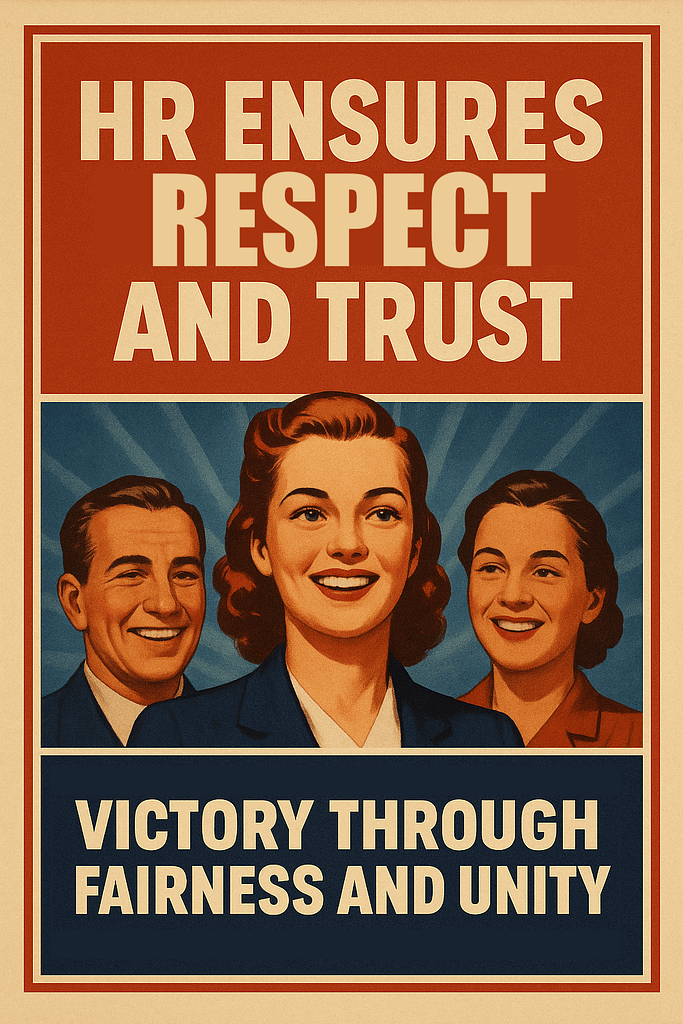
When HR gets it right, it doesn’t just protect the company, it enables the company to thrive.
The Choice We’re Faced With…
Is HR on the Employee’s Side or the Company’s?
Human Resources will never be your friend in the personal sense, and it shouldn’t be. Companies are not a family, and employees are not children in need of parental advocacy. HR exists to preserve the organization. That role is legitimate and necessary.
But these professionals must also remember that protecting the company cannot mean ruling through fear, secrecy, and arbitrary control. True stewardship requires humility, transparency, and virtue. Plato talks on the role of guardians to protect harmony, not themselves; and Aristotle talks of justice requiring balance, not extremes.
HR can either embody these principles or abandon them. And the consequences of either of these decisions are not abstract. They are measurable thorough attrition, performance, culture, and profitability.
The path forward is clear: HR can’t be your friend, but it also can’t be your enemy. It has to be what it was always meant to be: a guardian of justice within the company, a steward of equity, and a force that enables both the individual and the institution to flourish.
That is the HR organizations need, it’s what employees deserve, but unfortunately it’s what most companies are still missing.
Like This Article About Toxic HR?
Check out our piece on Toxic Leadership and the cost to organizations…