
We live in a culture and world that increasingly sees conflict as an opportunity… an opportunity to escalate, to posture, and all too often, to litigate. The courtroom, once a forum of last resort, has become just another bargaining table for those dissatisfied with the principle of enough. Most often, the threats are idle, an attempt to call a bluff, but the motive is almost always the same: to eek more restitution for the claimant.
In business, this presents us with a serious challenge. Most companies today bend over backward to resolve issues. It’s not just about customer satisfaction; it’s about brand reputation, consumer retention, and long-term trust. When something goes wrong, the best businesses don’t hide behind policies or dodge responsibility. They seriously assess the situation, own what needs to be owned, and offer a remedy that is fair, balanced, and thoughtful.
When Resolution Isn’t Enough
That’s exactly what happened in a recent situation I was involved in. A customer experienced a legitimate problem. We acknowledged it, we apologized, but unfortunately we made the experience a truly negative one. Once this all came to light (and after a diligent internal review, consultation, and careful consideration) we made an offer. We extended, what we were certain to be considered, a more than reasonable and fair offer to make things right. This wasn’t just some token gesture. It was substantial, proportionate, and delivered in good faith.
The customer soundly rejected it.
They approached us with concerns about the adequacy of our proposal, insisted more was deserved, and volleyed the threat of court. We offered an explanation and attempted to convey the serious consideration that had gone into our settlement offer. And then they filed a lawsuit.
The Folly of Greed
That action, I knew, was a mistake.
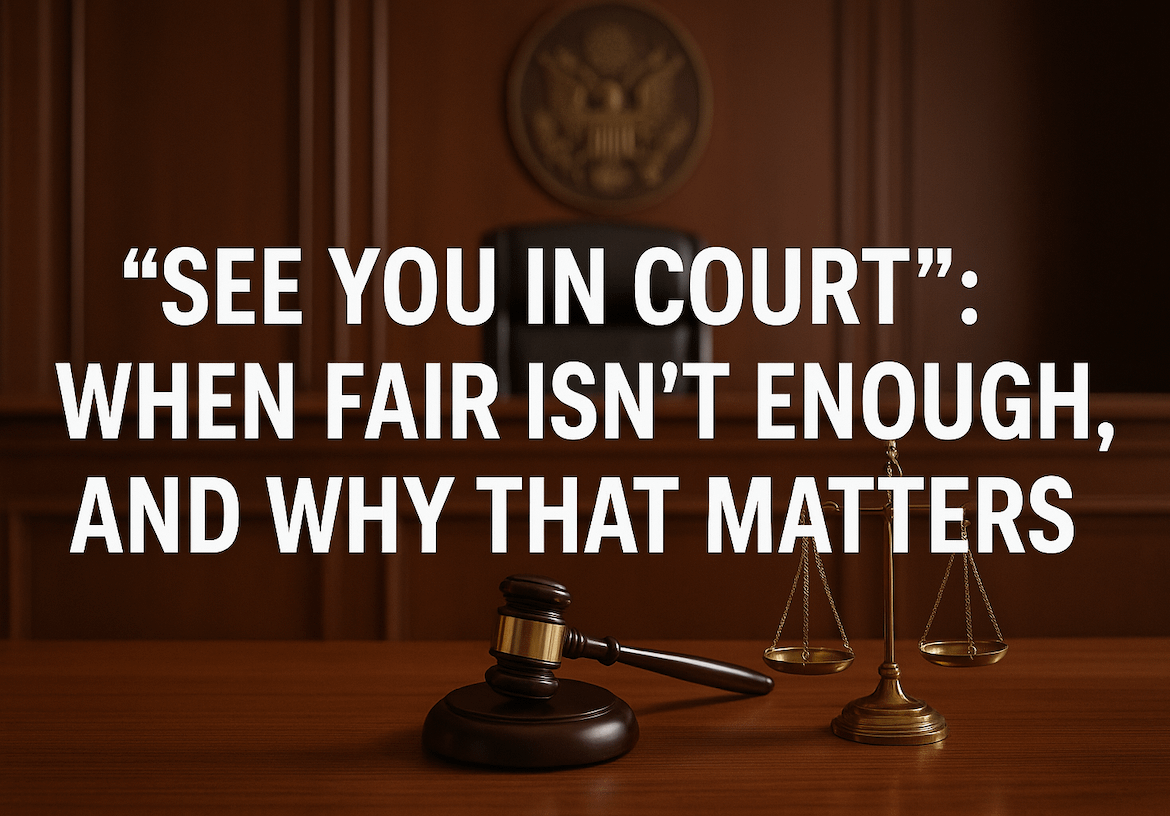
What many consumers don’t understand, and what some lawyers won’t tell them, is that court isn’t a leverage tactic. It isn’t supposed to be a game of chicken to see who blinks first. The purpose of court is to determine what is fair and reasonable under the eyes of the law. Not what feels fair, and not what might get squeezed out under pressure, but what is objectively just.
Buried in this commitment was a secret that we understood; we knew that our offer was more generous than what was required under the law and contract. This was intentional, by offering more than the bare minimum, we stand a better chance at recovering a poor consumer experience. Remember how important retention customers is?
That’s why we didn’t increase our offer. We weren’t being stubborn, we weren’t gambling, we were simply confident that what we extended was not just generous. It was reasonable and appropriate, and we stood by it.
The Cost of Folding Too Easily
The business world, just like any system of integrity, cannot afford to operate on the whims of extortion disguised as grievances. If we had folded simply to avoid the cost of litigation, what message would that have sent? That we reward the tactic of pressure over principle? That we’ll pay more to avoid the hassle, even when we’ve already done the right thing? That kind of short-term peace breeds long-term chaos and financial losses.
When you give more than what’s due in the face of threats, it doesn’t just end with that one case. You set a precedent that encourages others to follow down that same path, possibly anticipating that same windfall. It chips away at the foundation of your business. And it impacts not only your customers, but your employees as well.
The inability to know for certain which standard are being upheld, which customers get “the exception”. This all breeds confusion in the workplace. And beyond the walls of your business, it effects your ability to be consistent with all of your consumers. It tarnishes your commitment to fairness and equality and the trust from the people you serve.
Doing Right And Standing By It
The truth is, most businesses don’t want to fight, and they most definitely don’t want enemies. They want happy customers who return, who spread the word, who believe in the brand. Recovery from failure is sometimes more powerful than flawless execution. But there are always going to be limits.
At some point, standing firm is not about saving money. It’s about saving your brand’s integrity.
Because fairness is not a negotiation tactic. It’s a principle… it’s a tenet, and if that principle has to be defended in court, so be it, stand there and defend it proudly.
In the end, we won our case. We didn’t win because we had better lawyers or because we played hardball, but because we were right, fair, and reasonable.
The Final Reckoning of Accountability
So let that be a reminder: accountability is a two-way street. Businesses should absolutely be held to account when they fall short, but so should consumers when they cross the line from resolution to exploitation.
The courtroom is not a stage for outrage. It is a sanctuary for reason and justice. And those who enter it with greed in their eyes, hoping for a bigger payday than what fairness has called for, may find themselves quite sorely mistaken.
I’ll end on this: one of the most precious things anyone can have is their agency. The ability to make decisions for yourself, to determine the course of your own life and fortunes. A serious consequence of pursuing court out of greed, rather than fairness: you lose that agency you once had outside of the courtroom. Your fate falls to the decision of a judge or jury.
If someone is that willing to put their faith in another person to determine their outcome, they had best be certain that the argument is judicially sound, reasoned, and fair to have hope of a successful pursuit.