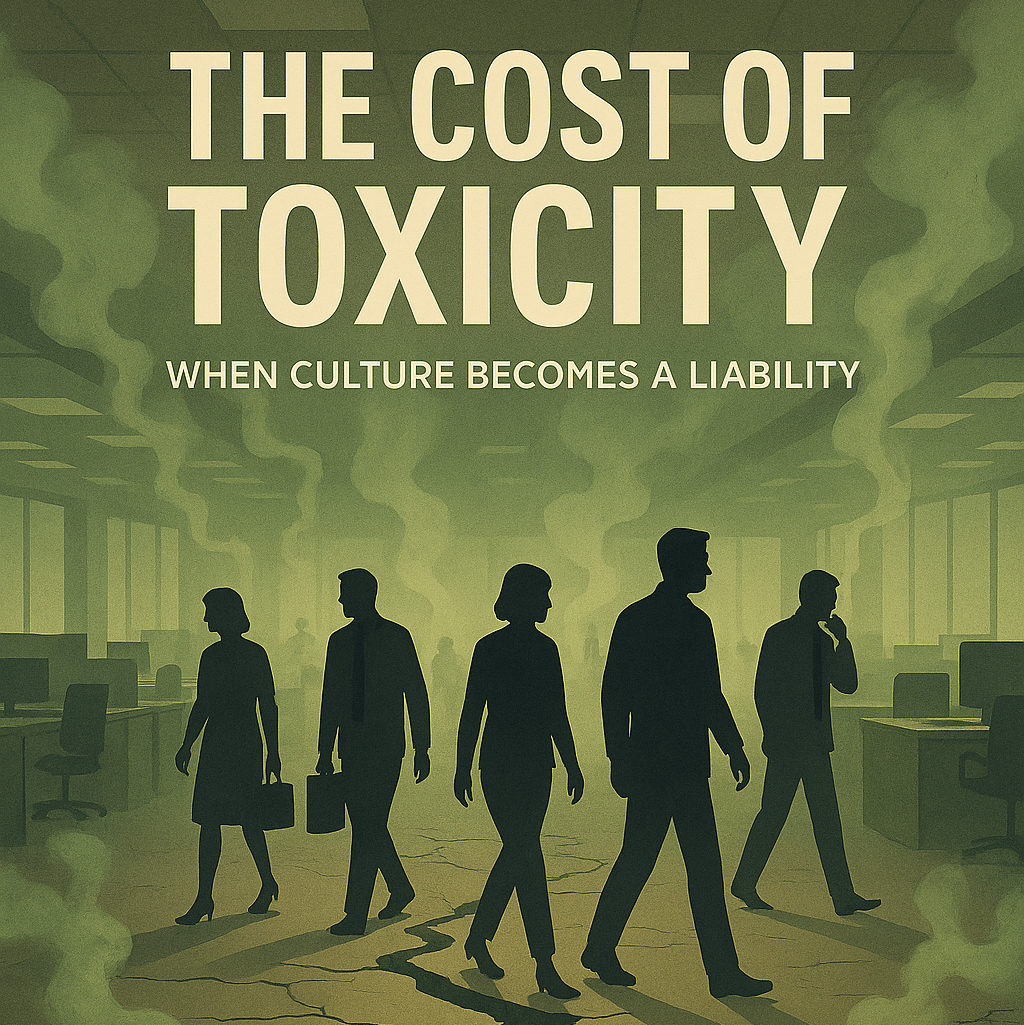

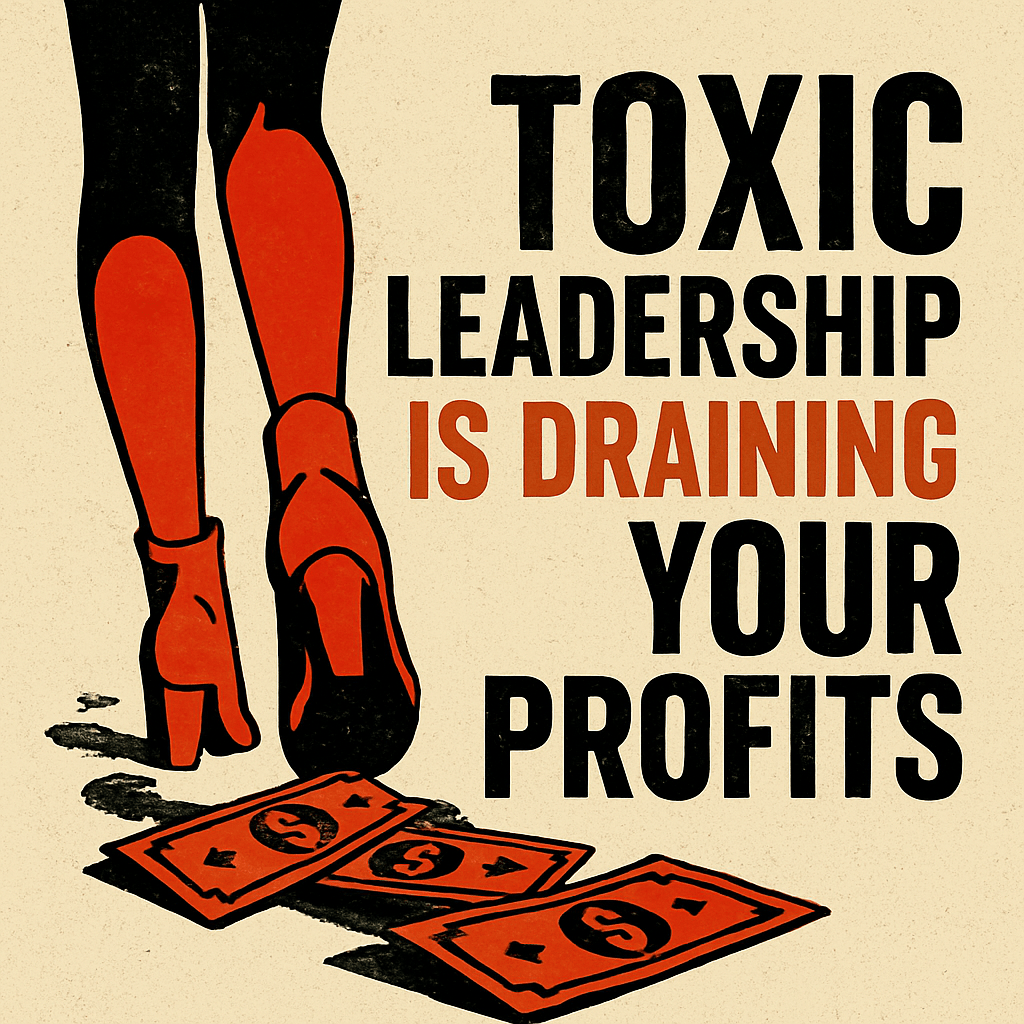
Mismanagement, poor communication, inconsistent policies, and disengagement…
Whichever part you consider – toxic leadership poisons performance, people, and profit….
Ethical and Reasoned Leadership Is About More Than People… It’s About Money
There’s a conniving and dangerous myth that has quietly crept into the modern workplace. It’s centered around two things most prevalent in business: people and profit. And it has nestled itself securely into the corporate psyche, especially within the offices of upper management:
“Leadership is about people, not profit.”
Sayings like this sound noble, it even sound inspirational, but it’s also deeply misleading. Because the truth is that real leadership is about both. The moment we, as leaders, separate ethics from economics, or decency from the bottom dollar, companies start paying the price. And this is not a turn of phrase; I mean this quite literally.
In any enterprise, great leadership is not just some moral compass: it’s a sound fiscal strategy.
The “Golden” Virtues: A Double Bottom Line
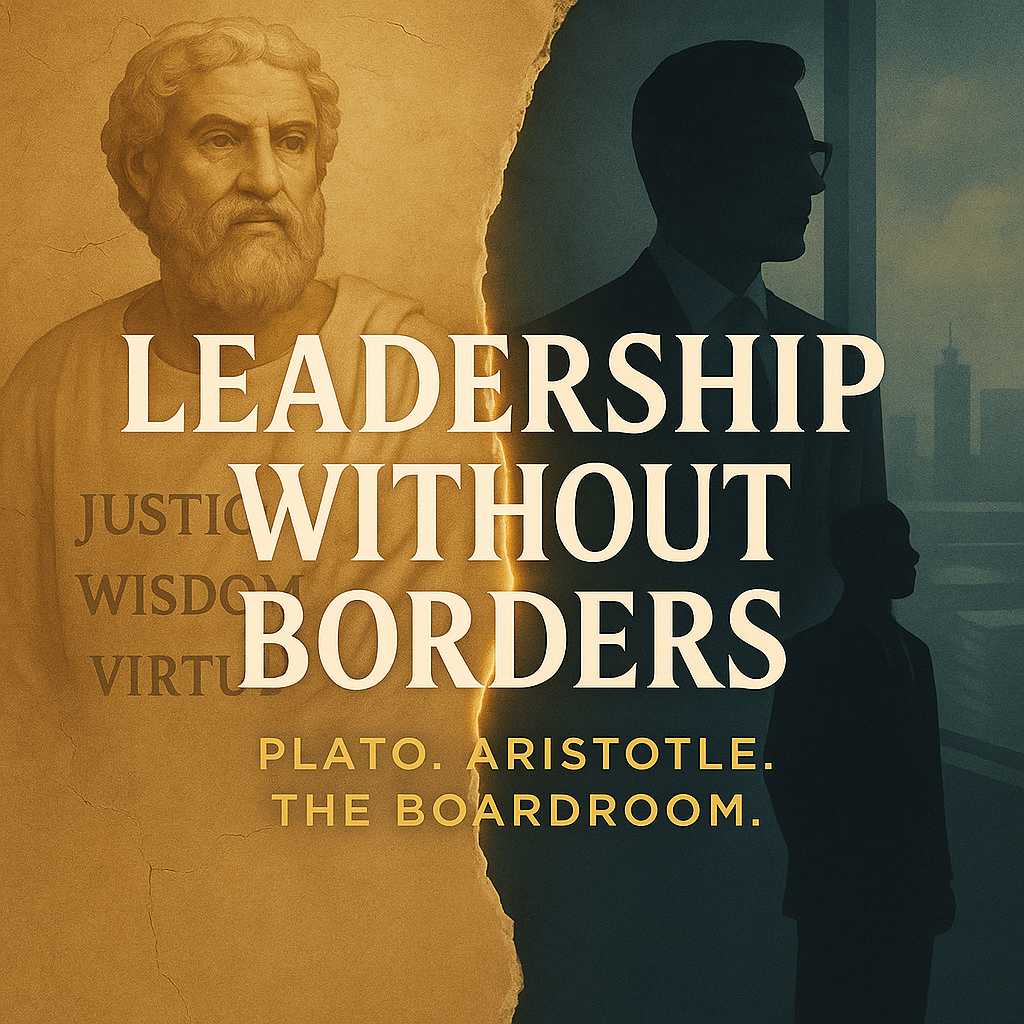
When I talk about the “golden virtues” of leadership, I mean it as a double entendre. First, in the classical sense of virtue, as described by philosophers like Aristotle and Plato – it represents the virtues reason, courage, temperance, justice. And second to our ethical virtues, but equally important to anyone in an organization (especially the corporate world), I refer to “golden” as in valuable. Profitable. It is a virtue representative of something measurable in its retention, reputation, or revenue.
When it comes to a business: good leadership is a guaranteed bottom-line booster.
Bad leadership, on the other hand? Nothing can destroy hard-earned progress and profits faster. It’s akin to building upon a sand foundation.
Yet, there seems to be no shortage of executives, existing in a seemingly perplexed state, when turnover rises, productivity falls, and consumer trust in the brand erodes. Worse still, they respond with indifference, as if there is nothing within their power or arsenal to set a fire-line against the damage. All this, without ever asking the hard questions about how their own conduct and culture may have contributed to the state of affairs.
The High Cost of Toxic Leadership
If your organization has ever suffered from excessive attrition, low morale, or a reputation you can’t seem to fix with PR or corporate communications… chances are the problem isn’t branding or compensation… it’s leadership.
This damage isn’t just emotional or cultural for an organization. It’s financial. The consequences of a toxic or disengaged leadership aren’t abstract, they’re measurable, and they’re devastating. And they show up in your accounting whether you want to acknowledge them or not.
Gallup has estimated that U.S. businesses lose around $1 trillion annually 1 due to voluntary turnover. And cue the cause… poor management is the most frequently cited reason for why employees choose to walk away. That number isn’t a rounding error, that’s a structural failure of leadership.
But here’s the kicker: it’s not just about what you pay your people. Research from MIT Sloan Management found that toxic workplace culture is over ten times more predictive of attrition than compensation 2. You can offer all the generous salaries and shiny perks you want, but if the environment is disrespectful, dismissive, or demoralizing, people will still leave. And when tenured or experienced people leave your organization, they’re taking more than just their skills. They take with them momentum, tenured knowledge, and very often, they take some of your organizational credibility. These losses can take years to rehabilitate, if at all.
“But we can always hire new employees”… Unfortunately, replacing attrition isn’t cheap either. The Work Institute puts the average cost of turnover at 33% of an employee’s annual salary 3. Once you account for the recruitment and onboarding, productivity losses and institutional memory gaps – that fiscal loss just gets compounded. Now, multiply that by every good person that you’ve lost, from the frontline to the senior suites, and try to explain it away with a corporate slogan.
I know that I’ve painted a fairly grim portrait here, but unfortunately, it gets worse. The cost isn’t limited to just attrition. Not all losses are so tangible: toxic leadership finally erodes trust, and trust is the foundation of every high-performing team.
So if your workforce seems tired, checked out, or quietly fleeing, it may not be the market, the work, or the competition. It might be you.
People Leave When Leadership Fails
A toxic environment isn’t just something that makes people feel uncomfortable, it propels them to leave. Toxic environments don’t just come from emotional or physical attacks, they are nurtured through inconsistent policies, a lack of understanding or communication, poor guidance and expectations; all of the things that contribute to employee confusion and frustration. And when people are frustrated, confused, or uncomfortable the natural response is fear.
When employees are showing up to work in fear, feeling disrespected, or lacking a sense of appreciation, they start to shut down inside. First, their motivation, then their collaboration, eventually, their loyalty.
That slow erosion will manifest itself in subtle ways: a decline in peer support, a sudden spike in errors, making less eye contact in meetings, taking more sick days, offering fewer suggestions, less initiative. And then it becomes obvious: people start leaving. Or even worse for the organization, they stay and simply disengage. It’s taking to keeping damaged tissue in a surgery.
And that’s where the damage starts compounding: unhappy employees sour the experience for others. Their frustration bleeds into the customer experience. Poor morale becomes bad service, becomes lost revenue, becomes brand decay.
Empty Promises Are Worse Than Silence
So what do so many companies do when faced with this problem?
Lights, cameras, initiatives: They hire culture consultants, launch internal newsletters about “listening,” roll out “mission values” workshops, and host all-hands meetings about change.
But what they don’t typically do is actually change.
The problem here is not the act of trying to improve. The problem is that the effort is superficial, and it’s been specifically engineered for optics instead of outcomes. These performative campaigns often do far more harm than good. Because when employees are told, “We hear you. We’re fixing this,” and then nothing gets better, it doesn’t restore trust, it just destroys it further.
The worst thing an organization can do is lie. If the truth is too unpalatable, it’s better to say nothing at all
Honesty Is More Valuable Than Hope
If your organization is in crisis, short on resources, or lacks the infrastructure to make sweeping changes right now, that’s alright. Then don’t pretend otherwise, own it, and use it as a springboard to help build a deeper relationship based in honesty between employees and leaders.
Tell the truth.
Be as candid as you can be about the challenges being faced. Acknowledge the limitations, share the context, and explain the “why.”
You’ll never be able to provide all employees with everything they want. But you can give them something they need and desire: respect. And respect is most powerfully communicated through honesty.
Even if employees aren’t thrilled with the message, they’ll remember that you treated them like adults, like peers. That’s the foundation of trust. From that place of trust, the organization can start to rebuild and recover.
This idea is expanded in a related article, “The Power of No”, which explores how honest boundaries, even disappointing ones, are more constructive than sugar-coated misdirection. If you’re interested on a customer-centered take on the respect of honesty, I encourage you to read it..
Denial Is a Red Flag
When it comes to feedback, pay attention to the sentiments around the surveys, if you ever hear leaders say things like:
- “The surveys are wrong.”
- “Only angry employees fill those out.”
- “That’s just noise.”
You should be deeply concerned.
Concerned because these aren’t just throwaway comments. They are signals, loud ones, that the leadership is unfit to lead. To be a true leader, you need to have the courage to confront what isn’t working, especially when it’s uncomfortable, and take ownership.
When employee sentiment is denied by leadership, they’re ignoring the very system they claim to lead.
A philosopher king, in Plato’s ideal, doesn’t rule by denial or ego. They govern through self-awareness, introspection, and reason. In the business world, your Executive Officers must embrace this same sense of duty. They are not immune to the consequences of culture. They are the source of that culture.
Own the Bad Before You Celebrate the Good
There’s a harsh truth here that many leaders would rather avoid:
Until you have owned the bad, you have not earned the good.
Celebrating profits, awards, and milestones is meaningless if the foundation beneath them is cracked. It’s imperative that leaders take responsibility not just for outcomes, but for environments. For how the people in the organization feel, not just what they do.
If you want to lead ethically (and effectively) you must acknowledge failure as often as you acknowledge success. The hardest conversations are the most important ones. Bad news, angry employees, negative feedback… these are not distractions. These are gifts. They are the rare, raw truths that offer a pathway to actual improvement.
Ignore them, and you’ll only find yourself paying for it later.
But face them and you might just find the golden virtues, moral and fiscal, waiting on the other side.
Ethical Leadership Isn’t Just Noble — It’s Profitable
The notion that ethical leadership is a “nice to have” but not financially relevant is one of the most costly misconceptions in modern business. Ethics isn’t a sideline, it’s a strategy.
Done right, principled leadership doesn’t just make people feel good; it pays in dividends.
Companies that commit to high ethical standards consistently outperform their peers. The Ethisphere Institute, which tracks companies recognized for ethical governance, found that those on its “World’s Most Ethical Companies” list outperformed the large-cap sector by more than 7% over five years 4. In other words, doing the right thing is absolutely a growth strategy, and a strong one at that.
Why? Because ethical leadership builds trust, and trust creates those conditions where people can do their best work. When employees believe in their leaders, they are automatically more engaged, more productive, and more resilient in the face of change. Studies show that organizations with high-trust cultures can see 50% more productivity, 76% more engagement, and 40% less burnout 5.
And never forget… trust isn’t just emotional in nature, it’s operational.
And in today’s market, where adaptability can make or break a business, trust also fuels agility. In fact, organizations undergoing transformational change were nearly six times more likely to succeed when their leaders actively modeled the behavior they wanted to see 6.
When employees trust the direction, believe in the mission, and feel respected by those in power, they don’t resist change. Employees like these make it a reality.
So while some companies out burning capital on rebrands, restructuring, or endless cycles of external consultants, the smartest ones are quietly investing in something far simpler and more enduring : a leadership team and philosopher rooted in reason, humility, and consistency.
The return?
Fewer resignations.
Better performance.
Higher loyalty, and a reputation that no amount of advertising can buy.
Final Thoughts… Lead Like It Means Something To You
No one is perfect, and you don’t have to strive for perfection, but leaders do have to be accountable.
Ethical and reasoned leadership isn’t a luxury, it’s a necessity. Because no matter what your business does, the complete costs of failure will never be found within the quarterly reports. It will be hiding in exit interviews, Glassdoor reviews, customer complaints, and the quiet erosion of your public trust.
In leadership, just like in life, the single greatest investment you can make is in doing what’s right. And doing the right thing might also be the most profitable decision you ever make for your business.
- (1) Source: Gallup, “State of the American Manager” (2015)
https://www.gallup.com/workplace/231590/state-american-manager-report-2017.asp - (2) Source: MIT Sloan Management Review, “Toxic Culture Is Driving the Great Resignation” (2022)
https://sloanreview.mit.edu/article/toxic-culture-is-driving-the-great-resignation/ - (3) Source: Work Institute, “2020 Retention Report”
https://workinstitute.com/retention-report/ - (4) Source: Ethisphere, “World’s Most Ethical Companies” (2022)
https://www.worldsmostethicalcompanies.com - (5) Source: Harvard Business Review, Paul J. Zak, “The Neuroscience of Trust” (2017)
https://hbr.org/2017/01/the-neuroscience-of-trust - (6) Source: McKinsey & Company, “The Role of Senior Leaders in Driving Transformational Change” https://www.mckinsey.com/business-functions/people-and-organizational-performance/our-insights