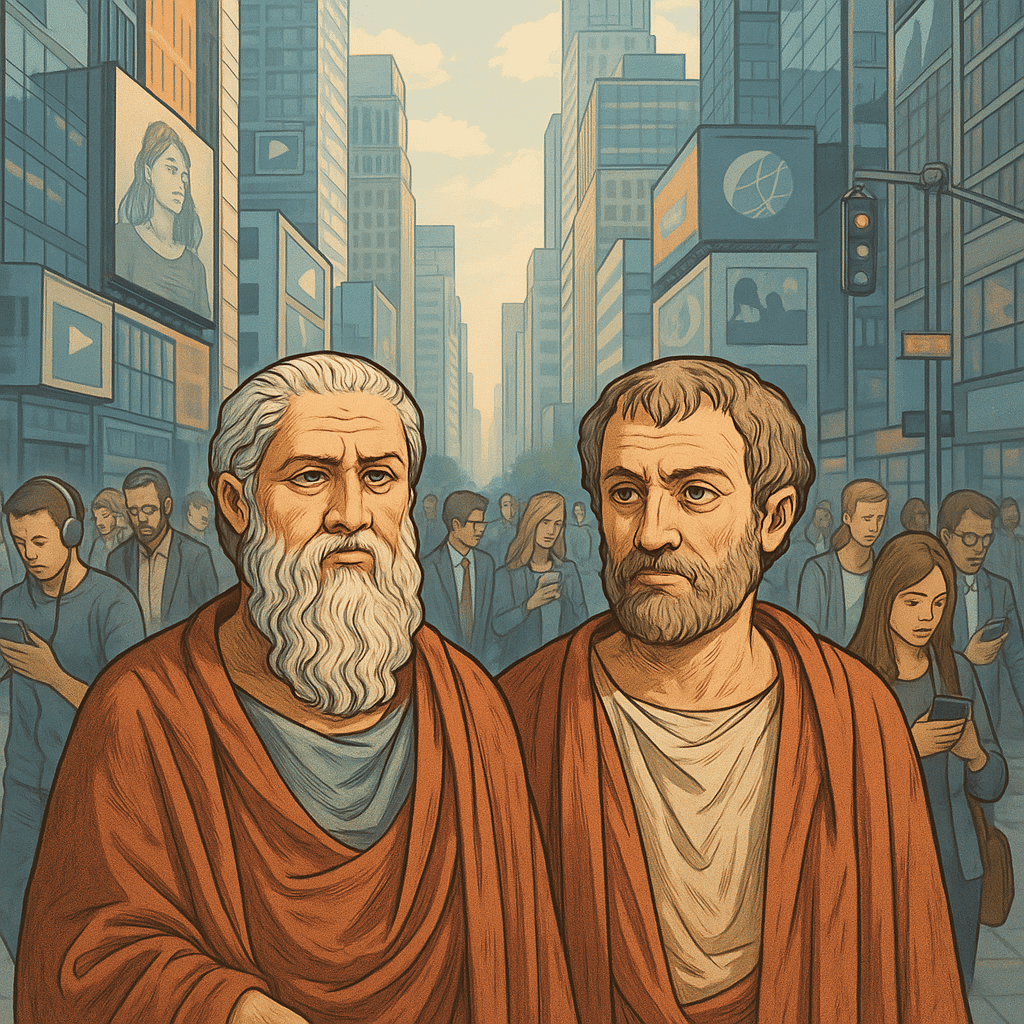

Common sense, once the guiding principle of everyday decision-making and public discourse, seems to be in its death throes. We live in an era of information overload, ideological extremism, and a growing detachment from objective reality. Rational thought and practical wisdom have taken a backseat to sensationalism and tribalism. The consequences are evident: fractured societies, misguided policies, and an inability to engage in meaningful discourse without devolving into hysteria or hostility.
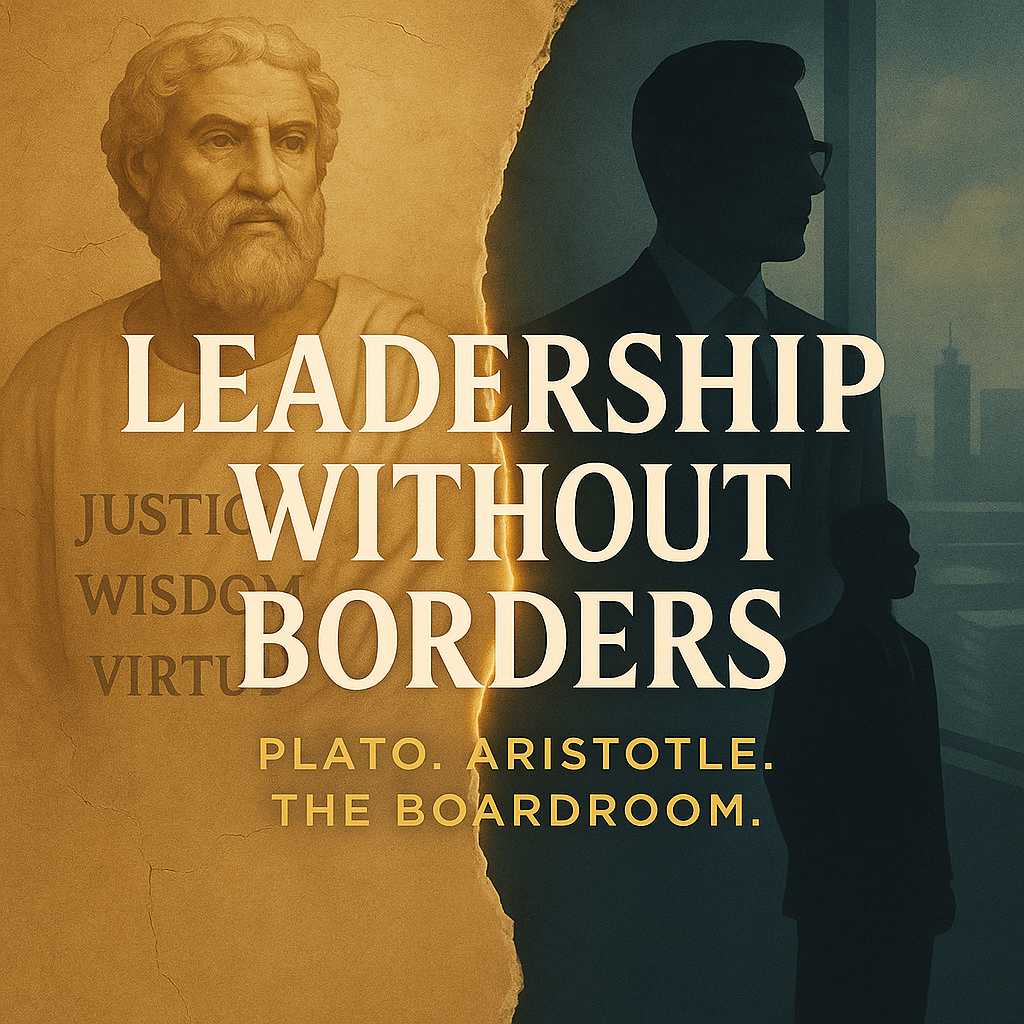
I have spent years solving complex business challenges, both in processes and with people. And one thing I have come to a realize: nearly every issue, no matter how intricate or modern it appeared, ultimately traced back to the fundamental ethical teachings of Plato and those later refined by Aristotle. These ancient philosophies, grounded in virtue, logic, and the pursuit of the good life, remain timeless. As humans, we may have an uncanny ability to overcomplicate the problems of the modern world. Often though, the solutions to these problems are often surprisingly simple. And they are waiting to be uncovered through simple ethical analysis provided by our Ancient Greek teachers.
What exactly can the Greeks can tell us…
Plato taught us to ask the right questions: What is justice? What is the good? What is truth? His dialogues challenge us to think beyond the surface and resist the temptation of convenient lies. Aristotle, in turn, gave us a framework for living ethically in a practical world. His concept of “phronesis” (practical wisdom) calls for decisions grounded not in ideology but in context, experience, and virtue. These are not some obscure ideas reserved for philosophers. These are fundamental tools for anyone navigating the challenges of leadership, governance, or even just their daily life.
Yet today, these tools have been cast aside. Instead of encouraging moral reflection or intellectual humility, our institutions often reward performative outrage and absolutist thinking. The loudest voices dominate the discourse, not necessarily the wisest. Metrics and algorithms now shape public opinion more than reasoned debate. We trade depth for virality, and nuance for soundbites. In such an environment, common sense struggles to survive.
"...decisions grounded not in ideology but in context, experience, and virtue"
Why Cardinal Tenets is Here
Cardinal Tenets was founded on the belief that we need a renaissance of reason… a return to principles that prioritize truth, intellectual integrity, and a capacity for respect of differing perspectives. This isn’t about nostalgia for so-called “simpler times” but about reclaiming the ability to think critically and act pragmatically in an increasingly complex world. We believe that by championing intellectual honesty, open dialogue, and pragmatic problem-solving, we can inspire a people to resist the erosion of common sense.
This intellectual revolution is not about elitism, it’s about empowerment. It’s about reminding everyday people that they have the right, and the responsibility, to think for themselves. To question assumptions. To push back against the false choice between chaos and control. It’s about understanding that complexity does not excuse inaction, and that common sense is not a relic of the past, but a tool for the present, and a resource for the future.
We envision a culture where disagreement is not a threat, but a catalyst for learning. Where policies are judged by their outcomes, not their slogans. Where leaders are chosen for their wisdom, not their theatrics. And where ethics is not treated as optional, but essential. It’s not the me, the you, the us, or the them… it is about a rational and pragmatic approach to any and all situations.
And that’s what drives us
But how did we get here? And more importantly, how do we fix it? This article serves as an introduction to the philosophy of Cardinal Tenets and the intellectual revolution it seeks to ignite. The mission is to make common sense common again, by grounding it in timeless principles and arming it with modern tools.
We’ll explore these ideas in depth, as they come, and I invite you to join me in this dissection and analysis. For now, consider this, what might the world look like if common sense regained its rightful place? Common sense not only in our personal lives, but in the public square and every aspect of our lives?
That’s us, that is Cardinal Tenets. We are the application of the most basic and reasoned appreciation of the problems we face, and how we attempt to address them.