

Organizational Health Can Learn from Mental Healthcare
I recently found myself talking shop with a psychiatrist. Not mine, though I’d like to go on the record – they’re definitely worth the self-investment and growth. We were comparing notes, his on people, mine on business needs; and very quickly we realized something strange… we do the same job. Sure, at different scale, but definitely the same species.
He helps individuals confront trauma, examine beliefs, and grow by develop healthier behaviors. I work with organizations to do… well, exactly the same thing.
It makes sense, really. Businesses are essentially people. After all, they’re run by people, influenced by people, designed to serve people. Once you strip away the layers of departments, metrics, and branding – what you’re left with is essentially a giant, collective person. A multinational brain with thousands of moving parts, feelings, reactions, fears, and blind spots.
And if we keep this analogy in play, then maybe what most businesses need isn’t just some new initiative or a culture campaign. When businesses find themselves in difficult times, maybe what they need… is therapy.
The Business as a Patient
This isn’t just a metaphor for fun. It holds up under scrutiny. Just like people, organizations develop behaviors based on their experiences… both positive and traumatic.
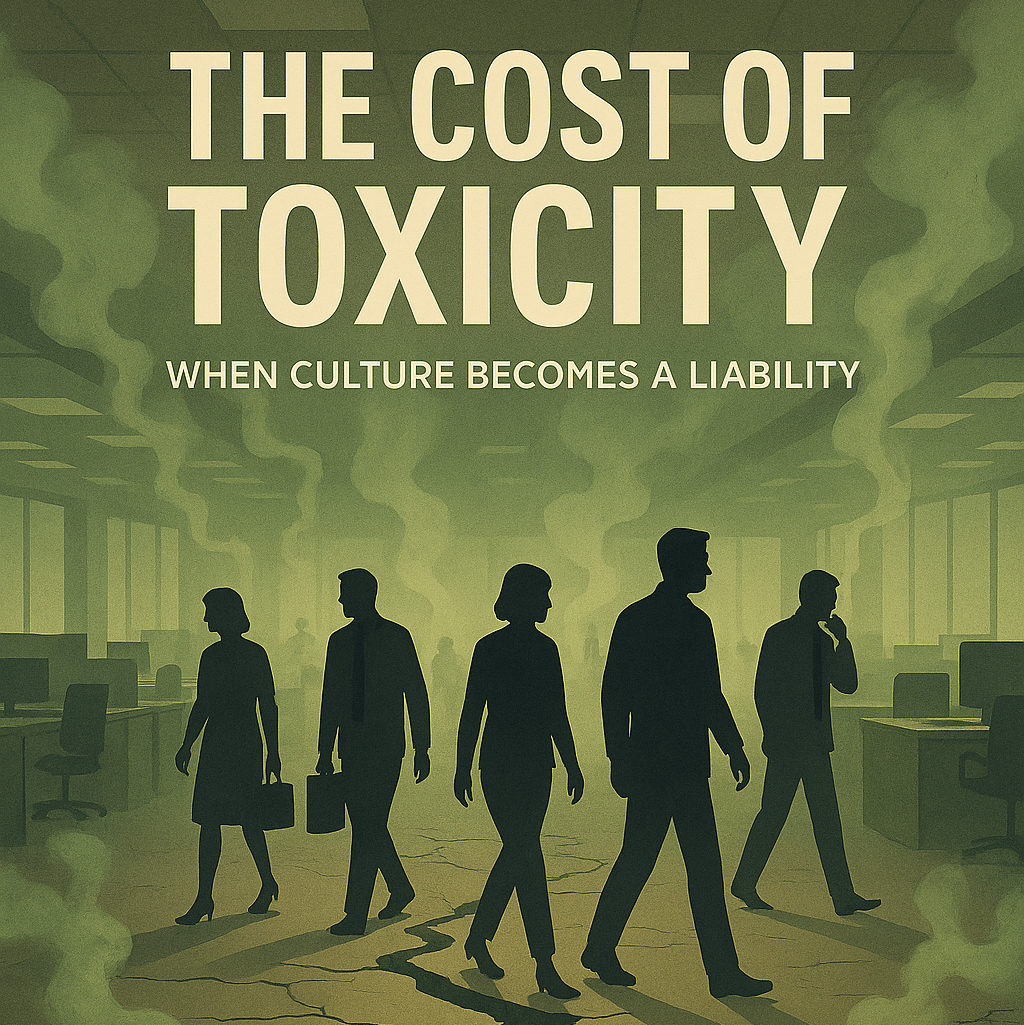
Businesses have memory, it’s their institutional knowledge, and sometimes it’s their institutional trauma. They have moods, which can show up as morale, burnout, or just general anxiety. They’ll act out behaviors in how they treat employees, customers, and their competitors. Businesses can, will, and frequently do, build defense mechanisms to ‘protect’ themselves; leveraging bureaucracy, micromanagement, PR, and blame-shifting. And yes, they often even develop delusions… grandiosity, denial, or an inability to own up to internal harm.
Much like the human mind, these conditions aren’t about to fix themselves, no matter how much time passes. If anything, these behaviors become even more entrenched. Things that started as coping mechanisms become policies. Something that was just miscommunication evolves into a culture of confusion. The more pain is buried, the more disruptive it becomes.
This isn’t something that happens overnight. And the signs and symptoms can show up everywhere: rising attrition, customer complaints, stagnation, finger-pointing, or a general sense of dissatisfaction that no one can quite put a finger on.
So when people say “it’s just business,” I always think, “Yeah, but no. No, not just business.”
It’s also personal, because it’s people, and people don’t just stop behaving and thinking like people because they get together as a corporation.
Leadership as Therapy
If a business behaves like a person, then its leaders inevitably take on the role of therapists. They consider the business’ positions, its problems; they’re the proverbial ‘brains’ of the operation.
But good leadership isn’t about control. It’s about observations and informed decision making. It’s about identifying harmful patterns, understanding their origins, and helping the organization evolve beyond them. That means asking hard questions and listening to some uncomfortable answers. Leaders need to sit with the tension of dysfunction long enough to understand it, instead of rushing to bury it under a new campaign or slogan.
Much like in mental healthcare, real progress only comes when someone’s willing to say, “There’s something not quite right here, and we need to talk about it.”
Leadership sets the tone. If the leader is reactive, fearful, or self-protective, the organization is going to mimic it. But if leaders create the space for honesty and growth instead of perfection, that mindset will ripple outward.
But even the best therapists suffer from their own personal blind spots, and the same is true for leaders. They may carry their own unresolved professional trauma, ego-driven distortions, or rigid beliefs that no longer serve the business.
Doctor, Heal Thyself
When leadership is faltering from being too busy, biased, or burned out; it’s not enough to just hope that things will get better. That’s when the business need a specialist… i’s at that point the business should be calling a doctor.
This is where consultants come in; or at least, they should. But just like in medicine, there are doctors and then there are quacks.
Unfortunately, too frequently, consultants show up with some pre-packaged slogans and sanitized slide decks, peddling their positivity without any real prescription. They skip the real diagnostics to offer easy off-the-self care. And provide affirmation instead of honest insight to the business leaders. They tell you what you want to hear, instead of what you need to. If this was truly a doctor-patient relationship, medical boards would take notice… and maybe in business, their boards should as well.

But a good consultant, one that cares, will follow the same principles as effective psychiatrists: they don’t just talk and prescribe, they treat. And treatment isn’t always easy, it requires clarity, precision, and very often, a bitter dose of the truth.
Sometimes remedies are uncomfortable… A long-standing process or tradition may need to be scrapped or a well-liked executive might be the source of cultural rot.
A good doctor doesn’t sugarcoat what’s necessary for healing and neither should a good consultant.
The Bedside Manner Matters
This doesn’t mean that the message should be delivered with cold calculation, devoid of empathy or compassion.
In both medicinal and business needs, bad news delivered without empathy can cause more harm than good. When difficult truths are coming from an outsider with no emotional sensitivity or human empathy, they’re often met with denial, resistance, or even outright hostility. When this happens, instead of progress, you’ll see business leaders retreat; doubling down on the very dysfunction that is supposed to be changing.
It’s not enough for a someone to just be right, they have to be heard to effect change. And if they want to be heard, people need to feel respected. Any good doctor knows how to speak to both the problem and the person – and a good consultant should do the same.
The truth hits differently when it’s offered with considered care; not as condemnation, but as an invitation to grow into a better place. When leaders feel respected, not attacked, they’re far more likely to accept the remedy and participate in their own healing. This is the point where real transformation begins.
Businesses Behave Like People, Because They Are People
Every single dysfunction in a company is a story waiting to be told. Just like every bad policy and morale problem has their own an origin stories. It’s impossible for therapy to erase the past, it just brings it into the light of a discussion so it can be stopped from controlling the future.
You don’t fix a company by slapping on a new mission statement or launching a shiny new “employee experience” program. You fix these challenges and problems the same way you help a person heal… You listen sincerely, make space for appreciation and understanding, constructively challenge ideas that are no longer working, and help the person become a healthier version of who they already are.
It’s work that takes significant time and investment but the payoff is enormous. Not just in the culture of an organization, but in performance, retention, and resilience to future challenges. By effectively treating these conditions business leaders, like patients, can learn to identify the symptoms of unhealthy behaviors in the future and address them before they need to call the doctor.
Later that week, I told a close friend about the conversation I’d had with the psychiatrist. After listening for a moment, he smiled and said, “So… consulting is basically running group therapy for an entire company.”
I paused, and realized he wasn’t wrong.